Introduction
The rate and nature of land use changes indicate where future environmental pressures are likely to arise. By European standards, Ireland has experienced a relatively high rate of land use change since the early 1990s.
Land is subject to many competing demands. We rely on our land resource for food, energy, forestry, recreational opportunities and overall, for a good living environment. Current land use is the result of a sequence of past human interventions on the natural landscape. More recently the population growth of the late 20th and early 21st century led to an increase in the extent of built-up areas. However, the overall area of artificial surfaces remains low in comparison with other EU countries, and agriculture is still the predominant land use in Ireland.
The soil of Ireland is an immensely valuable, and finite, national resource, which forms and evolves slowly over very long periods of time. Soil is a biologically active, complex mixture of weathered minerals, organic matter, organisms, air and water that provides the foundation for life in terrestrial ecosystems. The general consensus is that soil quality in Ireland is good; however, this is based on limited information.
State and Impacts
Land Use and Land Cover
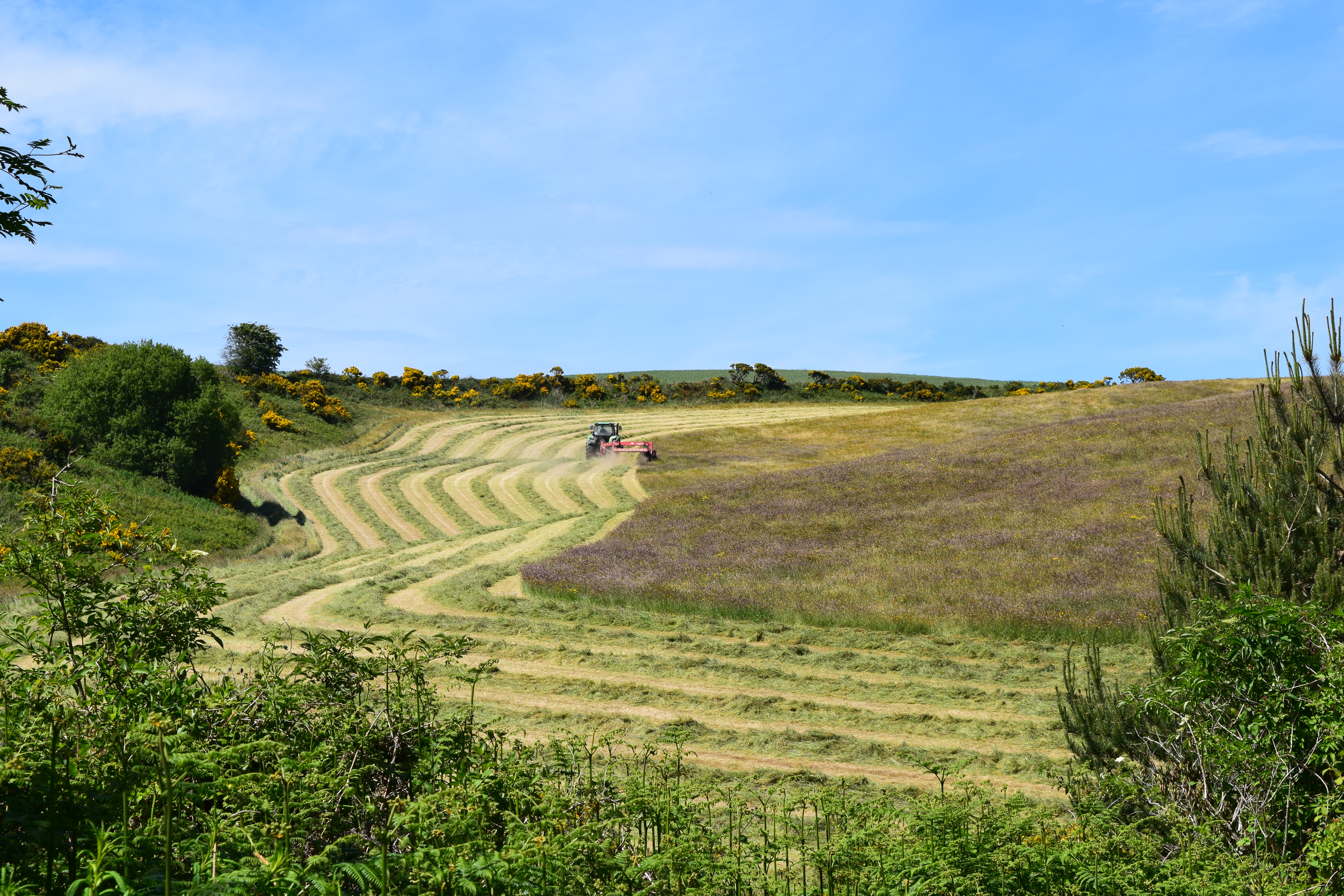
The main land cover type in Ireland is agricultural land, which accounts for two-thirds of the national landmass. Most of this is permanent grassland pastures. Peatlands and wetlands are the second most widespread land cover type, covering almost one-fifth of the country, while forested areas cover over one-tenth of the country. These figures show that despite rapid development in the past two decades, Ireland's landscape is predominantly rural and agricultural. Artificial surfaces account for 2 per cent of the land surface, which is half the Europe-wide average of 4 per cent.
The rate of change in land use and land cover since the early 1990s is relatively high by European standards. The main changes have been an increase in the amount of forested lands and artificial areas and a decrease in the total amount of agricultural land and peatland. The area under forestry has increased from 7 per cent to 11 per cent of national land cover during this period, primarily due to the planting of peatland and pasture lands with coniferous plantations. The area under artificial surfaces increased by approximately 15 per cent since 2000 to 2 per cent of national land cover. This mainly occurred on former agricultural lands on the periphery of existing urban areas, including the suburbanisation of villages close to larger towns and cities. There was also widespread construction of single rural dwellings in the countryside.
Soil
Historically, little attention has been paid to the conservation and protection of soils. There is relatively little legislation relating directly to soil and soil protection and there is a scarcity of data. Albeit that the degree of certainty is low, the general consensus is that soil quality in Ireland is good. The long growing season, absence of extreme temperatures, and frequent rainfall afforded by our temperate climate are beneficial to soil. The lack of heavy industry in Ireland means that our soils have not suffered from significant amounts of contamination. The large percentage of permanent pasture land has protected Ireland’s soils from serious degradation, with the notable exception of peatlands.
Drivers & Pressures
Land Use
Land is subject to many competing demands. Current land use is the result of a sequence of past human interventions on the natural landscape. Policies related to forestry, renewable energy, agriculture, peatlands and the built environment have associated environmental concerns with regard to land use change and land resource management.
Population Growth
The principal causes of land use changes in urban areas have been the development of housing and associated commercial services built to cater for the increase in the population and consequent growth of suburbs, satellite towns and villages. This increase in artificial surfaces impacts on many aspects of the environment including climate, biodiversity, air quality and water quality.
Soil Degradation
The degradation of soils is a serious issue across much of Europe and initiatives at EU level provide a timely incentive to assess critically the condition of soils in Ireland. The EU Commission set up the Thematic Group for Soil Strategy in 2004 to identify the potential threats to soil function. Its analysis identified six degradation processes that impact on soils: soil sealing, erosion, organic matter decline, compaction, salination and landslides. While a number of these processes are naturally occurring, human activity is an additional driver of degradation through poor land management.
Soil Contamination
Soil can be contaminated by a wide range of potential pollutants, through either point source contamination or diffuse contamination. Contamination from point sources can arise as a result of leakages and accidental spillages from commercial activities e.g. petroleum storage tanks, old gas work sites, timber treatment or landfills. Diffuse contamination can arise from activities such as agriculture, forestry, horticulture and domestic septic tanks. The EPA is currently developing guidelines for the management of contaminated land and groundwater at EPA licensed facilities.
Responses
Strategic Environmental Assessment
The EU Strategic Environmental Assessment (SEA) Directive became a legal requirement in Ireland since 2004. The main objective of SEA is to provide environmental protection and to implement environmental considerations into plans and programmes with the promotion of sustainable development. SEA is mandatory for certain plans/programmes in the areas of agriculture, forestry, fisheries, energy, industry, transport, waste management, water management, telecommunications, tourism, town and country planning and land use.
Almost 300 SEAs have commenced in Ireland since their introduction in 2004. Of the sectors specified in the Directive, land use planning has had the most significant take-up, accounting for approximately four-fifths of all the SEAs undertaken. It is notable that a number of significant sectors, in particular the forestry, tourism and telecommunications sectors, have yet to engage fully in the process.
A review of the effectiveness of SEA in Ireland, completed in 2011, found that SEA is clearly raising the public profile of environmental issues in decision making at plan level among those sectors that have fulfilled their obligations under the Regulations. Overall, it was found that SEA was fulfilling its role and that considerable progress has been demonstrated in applying SEA in Ireland over a short seven years.
National Landscape Strategy
The European Landscape Convention, adopted in 2000, emphasises the need to seek the right balance between management planning and protection of a landscape. The National Landscape Strategy Steering Group was established by the DAHG in 2011 to develop a National Landscape Strategy with the aim of sustainable management of change affecting landscape.
Environmental Liability
The Environmental Liabilities Directive (ELD) establishes a framework for environmental liability based on the "polluter pays" principle and aimed at preventing environmental damage to water resources, soil, fauna, flora and natural habitats. The central aim of the ELD is to hold operators, whose activities have caused environmental damage, financially liable for remedying this damage. In addition, the ELD holds those whose activities have caused an imminent threat of environmental damage liable for taking preventive actions. The EPA has been designated the competent authority in Ireland for the ELD and national regulations.
Outlook
The trend in the past decade towards the development of low-density residential development on the periphery of cities and the suburbanisation of satellite villages and towns has largely ended. Economic circumstances mean it is likely to be some years before there are pressures to convert a significant amount of land for development purposes. The main drivers of land use change over the coming decade will be the agricultural policies of afforestation and Food Harvest 2020. Environmental considerations must be integrated in the implementation of these policies from the start to prevent unsustainable impacts on the environment.
The sustainable management of both land use and soils requires an integrated approach from the key statutory bodies. The proposed National Landscape Strategy for Ireland needs to be prepared and fully implemented. Similarly, a National Soil Protection Strategy, including the identification of soils at risk and addressing the need to establish a soil monitoring network, is required. The information available on soil is currently not sufficient and it is vital to improve our evidence base to provide information and guidance to policy and decision makers.
Ireland’s peatlands are of immense value and their degradation impacts on climate change, biodiversity and water quality. Inappropriate construction, unregulated extraction and site preparation at peatland sites have been shown to degrade peatland structural integrity over a wide area adjacent to some developments. It is important that these threats to ecosystem function and carbon stocks be minimised through robust and integrated planning, assessment, authorisation, enforcement and management processes. In this context the proposed National Peatland Strategy will be of considerable benefit. The issues of spatial planning, land use and soil quality are intertwined and interdependent, and this should be reflected in integrated policies and plans at national, regional and local levels. The continued uptake of the SEA Directive across all economic sectors is important, and programme/plan makers across all sectors need to engage fully with the requirements of the SEA process.
While Ireland has fewer contaminated land problems than most other heavily industrialised countries, there is no overall policy framework for the identification, management and remediation of contaminated land in Ireland. National legislation dealing specifically with soil contamination needs to be developed, including a mechanism for remediation of sites.